
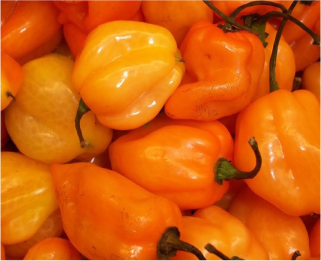
Medium/large plant size, large red or yellow fruit, a good source of Vitamins A & C, high in fiber, flavorful, mild/hot taste (30-350K SHU)
Raise transplants in the nursery (70-85o F) 7-8 weeks before transplanting to the field or pot. The plant grows well in professional mix or garden or well-drained field soil with pH 6-7, organic matter >1.5%, good moisture, high temperature (75-90o F), high light intensity, medium/high NPK fertilizer or nutrient-rich organic soil, and zero to minimum weed interference. Insect and disease problems are rare.
Begin harvesting mature green and/or red ripe fruit manually from the end of August/early September. Repeat every 2-3 weeks till frost. (Photos show our habanero fruit types)
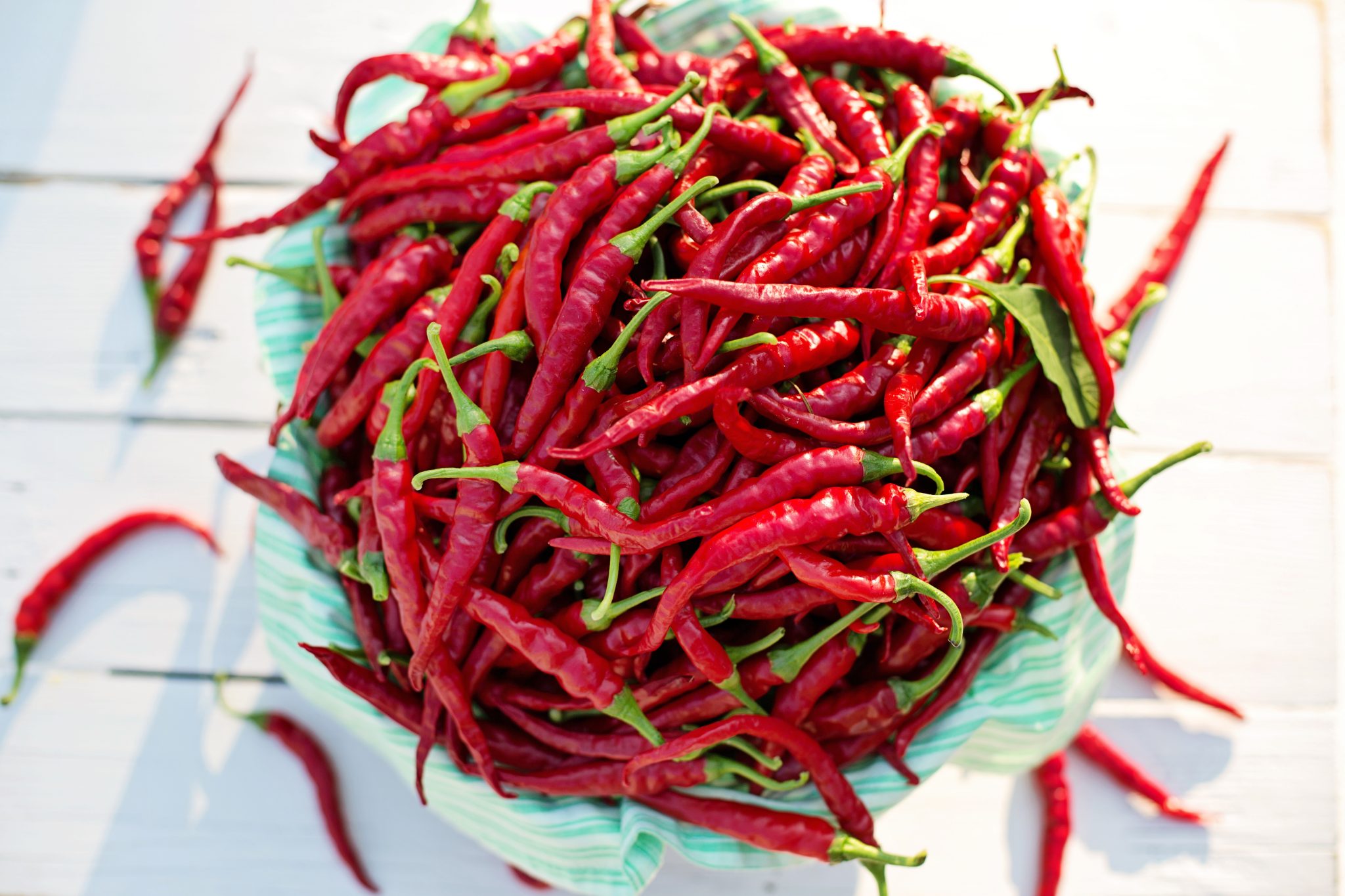
Medium/large plant size, long fruit (3-8”) with thin or fleshy skin, fresh fruit is high in fiber and carbohydrates, rich in antioxidants, Vitamins A, B6, B2, C, and K; folate, elemental K, Mg, Se, and Zn; the taste is mild (5-30K SHU). Fresh fruit consumption provides major health benefits including protection from heart diseases, improved digestion, increased metabolic rate, and arthritic pain relief.
Same as for Habanero peppers except transplants only need 5-6 weeks in the nursery before transplanting to the field or pot.
As described for Habanero peppers. (Photos show some of our high-yielding cayenne peppers)
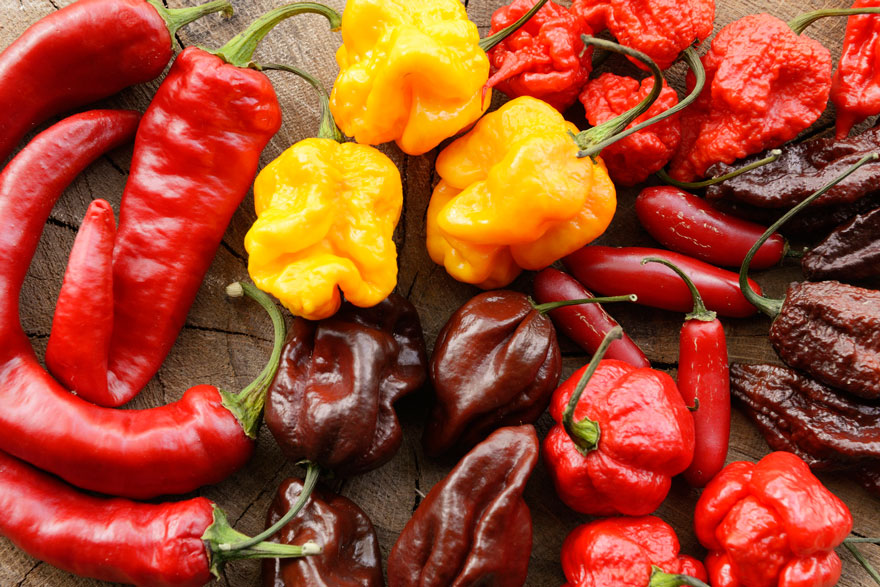
Medium/large plant size, medium/large red or yellow fruit, shape varies from one selection to another. A major difference from regular Habaneros is the heat level in the fruit. The super hots have >400K SHU, and the hottest, Pepper X, may have higher than 3,000K SHU. (Photo shows some superhot peppers in our collection)
As described for Habaneros.
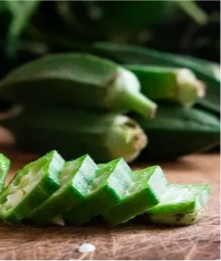
Large plant size (6-8’ tall), large palmate leaf, fluted fruit varies in size (2-6” long) and color (green, red, variegated), based on selection (see photo of fruit from different okra types). Fresh fruit is low in calories, high in fiber, rich in antioxidants and Vitamins A and C; and a good source of Vitamins B6 and K. Fruit has a slimy texture which may be removed by soaking in vinegar for 20-30 minutes. Fresh immature fruit is crunchy and tastes like cucumber when mixed with salad.
Sow seed directly in the field (or pot) in mid-May (preferred method) or raise seedlings in the nursery for 5-6 weeks before transplanting to the field (or pot) from mid-May to early June. Plant grows well in same conditions as described for Exotic peppers.
Begin harvesting fruit manually from 6-8 weeks after transplanting/sowing, for marketable fruit size, repeat every 3-4 days until frost. Remember to leave some fruit to mature and dry on the plant for seed harvest for planting in the following season.
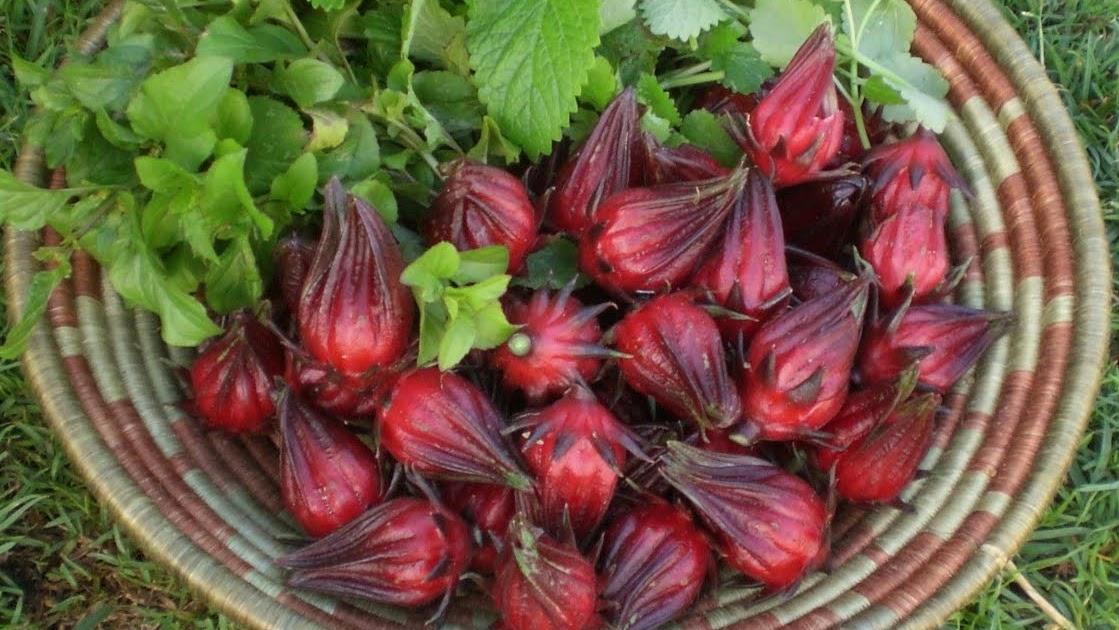
Large shrubby plant (4.5-5’ tall), profuse branching with pentalobed leaves. Stem colors are red or green, leaf color is mainly green. Leaves are sour-tasting, low in calories, high in fiber, rich in antioxidants, and a good source of elemental Ca, Mg, K, P, Fe and Zn. Plant is grown for leaves in temperate climates, may be grown for leaves, flowers, and fruit only in subtropical and tropical climates.
Sow seed directly in the field (or pot) in mid-May (preferred method) or raise seedlings in the nursery for 5-6 weeks before transplanting to the field (or pot) from mid-May to early June. Plant grows well in same conditions as described for Exotic Peppers and Okra.
For leaf, start harvesting 8-10 weeks after transplanting/sowing, using a sharp knife or shears to cut back 9-12” long branches that carry clean whole leaves. Repeat branch clipping every 18-21 days till frost.
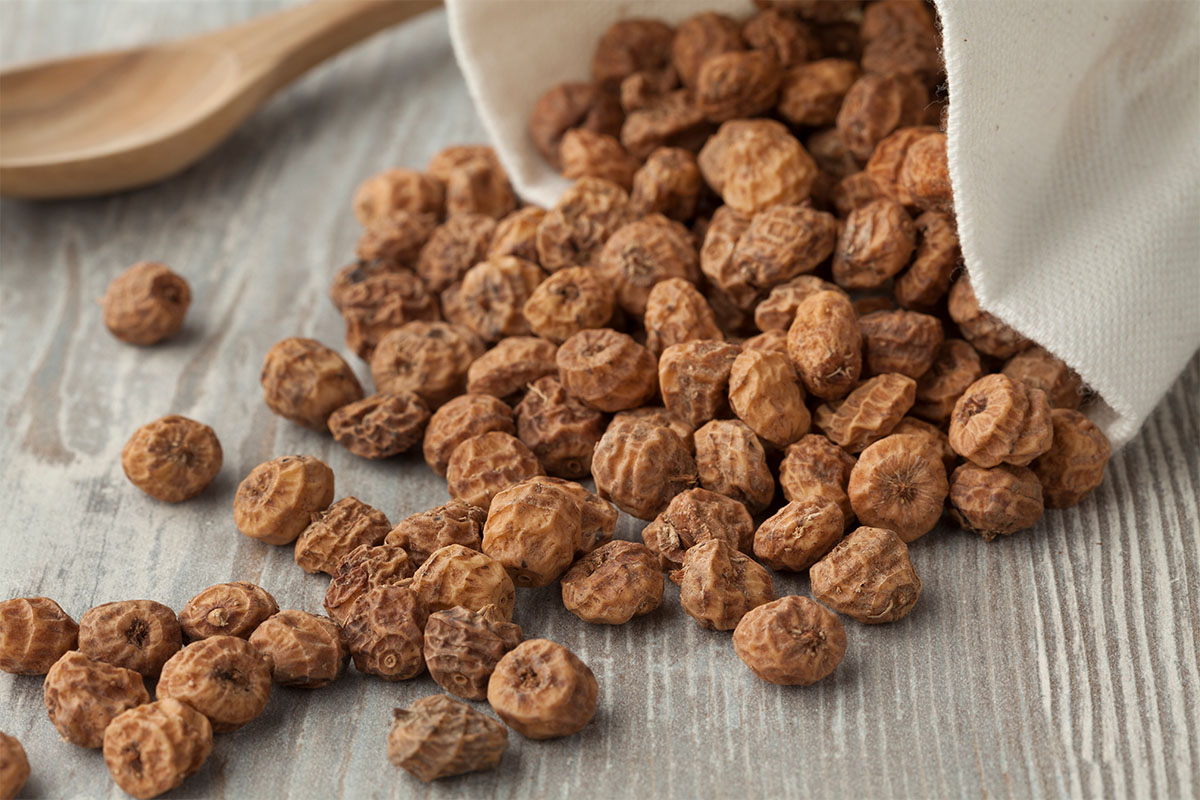
A superfood that grows like yellow nutsedge. It is grown for high energy underground tubers that are eaten as snack. Tuber is sweet and chewy; and gluten free. It is high in dietary fiber, oleic acid, P, K, Fe, Zn and Vitamins C & E. Quality of oil from tuber is similar to olive oil.
Raise transplants in nursery (70-85o F) 3-4 weeks before transplanting to the field (or pot) in mid-May; OR plant tubers directly in mid-late May. Plant grows well in professional mix or garden or well drained field soil with pH 6-7, organic matter >1.5%, good moisture, high temperature (75- 90o F), high light intensity, medium/high NPK fertilizer or nutrient rich organic soil, and zero to minimum weed interference. Insect and disease problems are rare.
Manually harvest tubers anytime between 14 and 16 weeks after planting. Clean tubers with water and airdry for 5-7 days before use.
Small/medium plant size, medium/large leaf, leaf is a rich source of Vitamins A, C & K; elemental K, Ca, Mg, Fe, Mn, Cu, & Zn; low in calorie, high in fiber.
Raise transplants in nursery (70-85o F) 3-4 weeks before transplanting to the field (or pot) in mid-May; OR sow seed directly in mid-late May. Plant grows well in professional mix or garden or well drained field soil under pH 6-7, organic matter >1.5%, good moisture, high temperature (75- 90o F), high light intensity, medium/high NPK fertilizer or nutrient rich organic soil, and zero to minimum weed interference. Control insects and diseases as needed.
Begin leaf harvesting 3-5 weeks after transplanting/sowing. Repeat every 10-15 days until flowering.
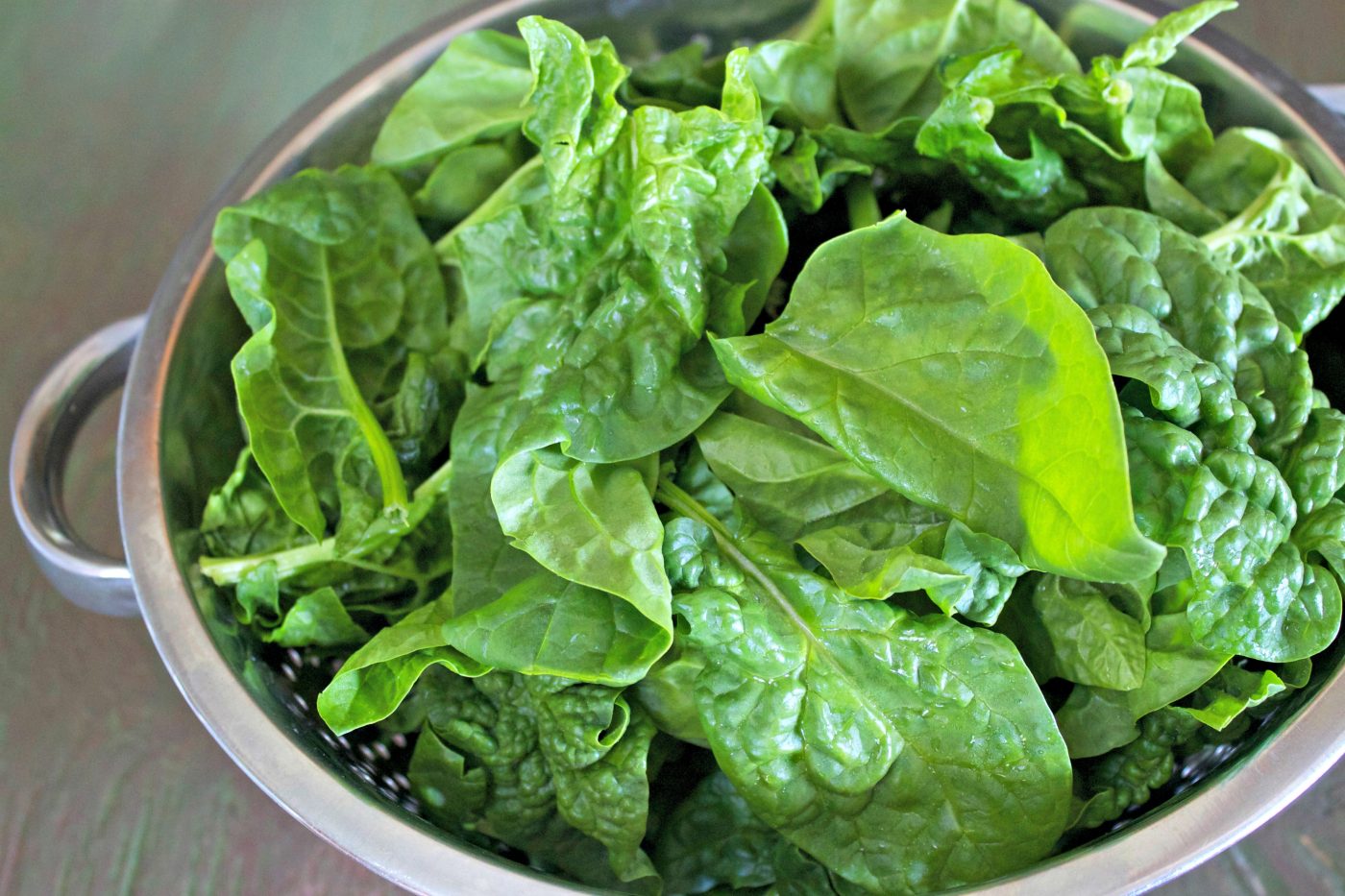
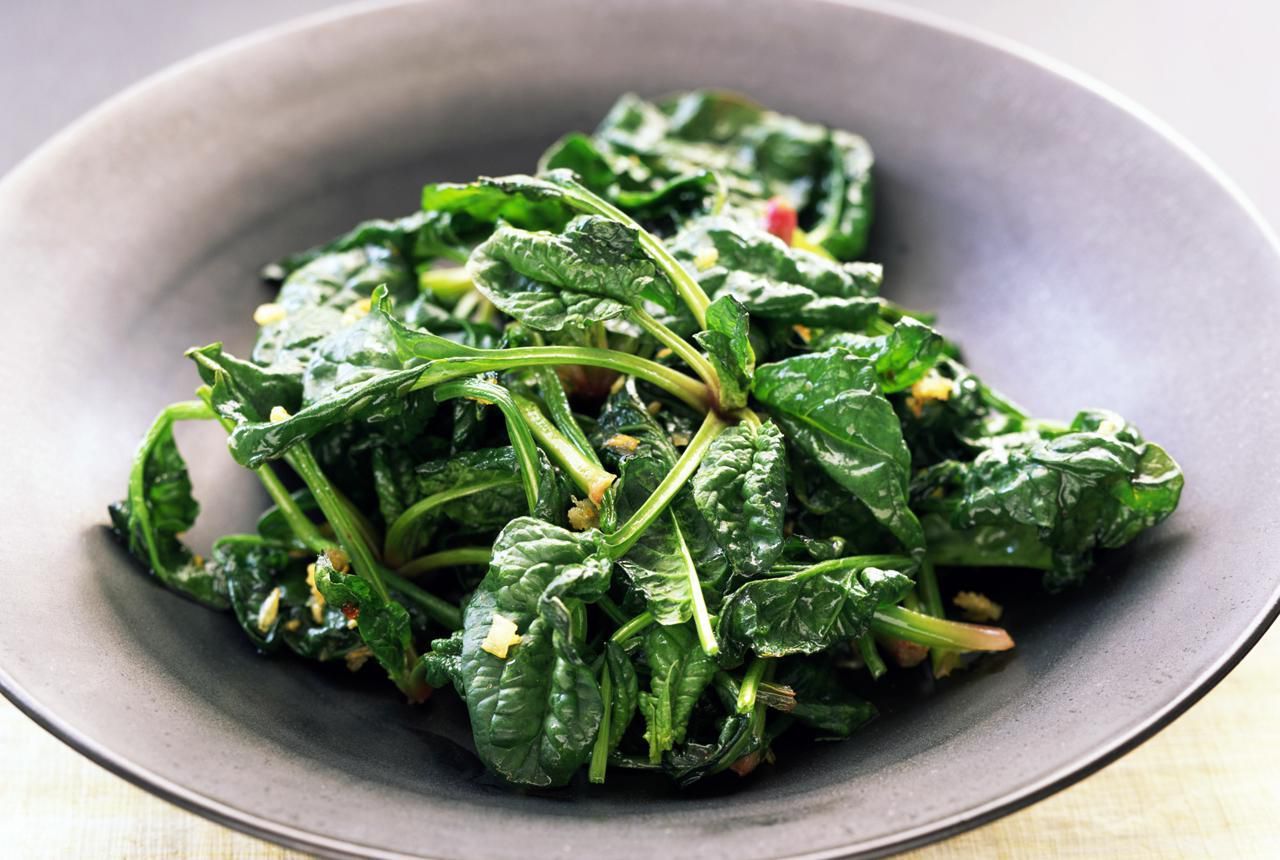
Small/medium plant size, medium/large leaf, leaf is a rich source of Vitamins A, C & K; elemental K, Ca, Mg, Fe, Mn, Cu, & Zn; low in calorie, high in fiber.
Raise transplants in nursery (70-85o F) 3-4 weeks before transplanting to the field (or pot) in mid-May; OR sow seed directly outside in the field (or in pots) in mid-late May. Plant grows well in professional mix or garden or well drained field soil under pH 6-7, organic matter >1.5%, good moisture, high temperature (75-90o F), high light intensity, medium/high NPK fertilizer or nutrient rich organic soil, and zero to minimum weed interference. Control insects and diseases as needed.
Begin leaf harvesting 3-5 weeks after transplanting/sowing. Repeat every 10-15 days until flowering.
We Promote Crop Diversification for Healthy Living and Food Security.
Copyright © Albert Ayeni All Right Reserved